Algorithm Research Intern, SenseTime·M.Sc. Robotics, NUS
I am an Algorithm Research Intern at SenseTime in Singapore and an M.Sc. Robotics student at the National University of Singapore. My research focuses on embodied intelligence and world models—studying how robots predict physical dynamics, retain long-horizon memory, and plan multi-step actions in the real world.
Gives a world action model two memories driven by its video expert, with no extra supervision: endogenous memory tracks task progress, and exogenous memory records where the scene departs from the model’s prediction. Introduces RMBench-Dynamic; 58.8% there, 81.7% on RMBench, and 57 of 60 real-robot trials.
@misc{gong2026emwam,
  title  = {Endogenous and Exogenous Memory for World Action Models},
  author = {Gong, Zerui and Barannikov, Marina and Wu, Zhonghua and Lu, Shanshan and Gao, Junjie and Yang, Zhe and He, Jinglin and Li, Quanzhou and Qiao, Weijie and Li, Qinyue and Tao, Qingyi and Loy, Chen Change},
  year   = {2026},
  url    = {https://pawteam-eai.github.io/em-wam/}
}
Uses one pretrained video diffusion transformer as both inverse and forward dynamics model, with learnable dynamics registers as the only bridge, so a video’s motion is distilled into a compact latent action. The latents replay across robots, scenes and from human hands to robots, and teach PAWlicy, a VLA pretraining recipe that reaches 93.6% on RoboTwin 2.0.
@article{li2026nativelam,
  title   = {World Models as Native Latent Action Models},
  author  = {Li, Qinyue and Qiao, Weijie and Tao, Qingyi and Gong, Zerui and Yang, Zhe and Li, Quanzhou and Zhang, Taolin and He, Jinglin and Wu, Zhonghua and Loy, Chen Change},
  journal = {arXiv preprint arXiv:2611.30898},
  year    = {2026}
}
A study of how far GPT-6-Astra goes as an embodied agent: 12 benchmarks across manipulation, humanoids, mobile platforms and dexterous hands, a System 2 reasoner with System 1 controller harness, and deployment on eight real robot configurations. It has largely crossed the threshold of embodied competence, but not yet of practical embodied intelligence.
Builds a simulatable world from a few images of a place: the scene is reconstructed as a 3D proxy refined by a VLM agent, a scene program and simulator compute how objects move, and a video model renders the result with the input images as context. The world can be explored from new viewpoints, edited, and used for robot tasks.
@article{luo2026mundo,
  title   = {Mundo: Customized World Model},
  author  = {Luo, Yihang and Xu, Zunnan and Zhou, Shangchen and Lan, Yushi and Liao, Kang and Gong, Zerui and Wu, Xiaoming and Tao, Qingyi and Wu, Zhonghua and Jin, Bixuan and Wang, Fei and Hou, Zhi and Wang, Xiaogang and Pan, Xingang and Loy, Chen Change},
  journal = {Preprint},
  year    = {2026}
}
Ran Zhao, Sheng Jin, Size Wu, Kang Liao, Zerui Gong, Zujin Guo, Yang Xiao, Wei Li
arXiv, 2026
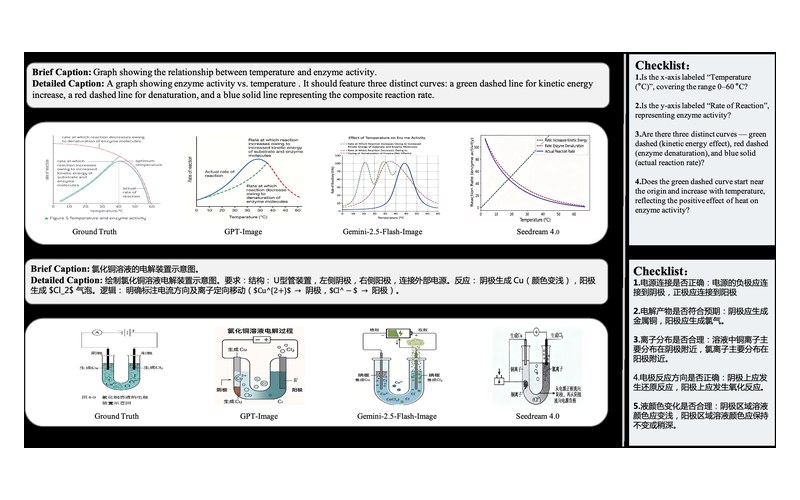
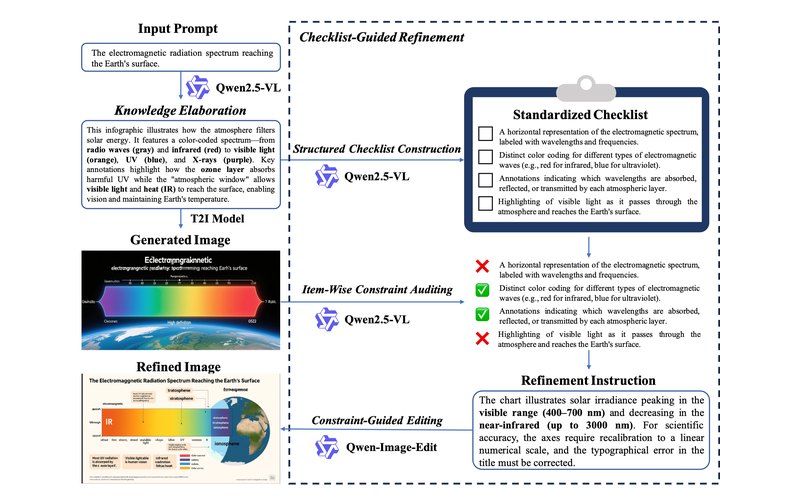
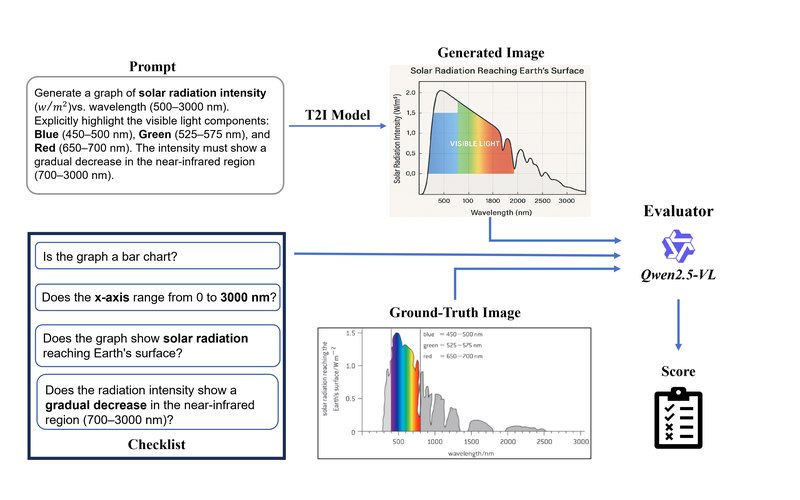
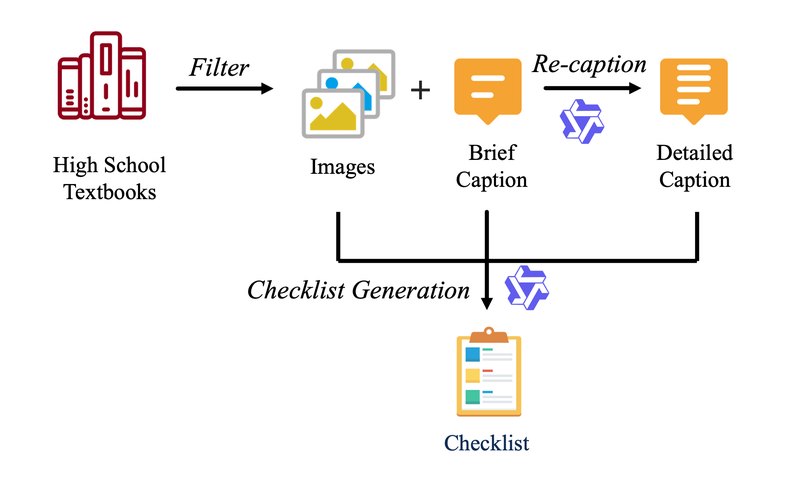
KVBench: 1,800 expert-curated prompts from over 30 high-school textbooks in six subjects, on which 14 text-to-image models show clear gaps in scientific correctness. KE-Check enriches prompts with domain knowledge, then edits images against a checklist of constraints, narrowing the gap between open and closed models.
@article{zhao2026kv,
  title   = {Knowledge Visualization: A Benchmark and Method for Knowledge-Intensive Text-to-Image Generation},
  author  = {Zhao, Ran and Jin, Sheng and Wu, Size and Liao, Kang and Gong, Zerui and Guo, Zujin and Xiao, Yang and Li, Wei},
  journal = {arXiv preprint arXiv:2604.22302},
  year    = {2026}
}
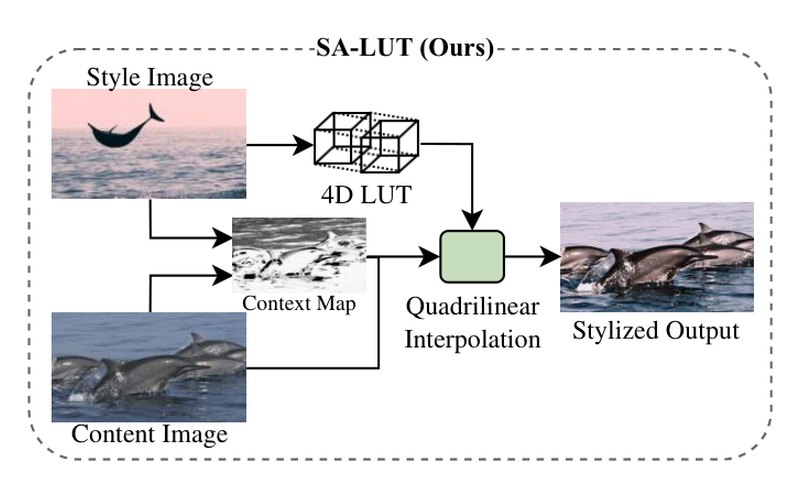
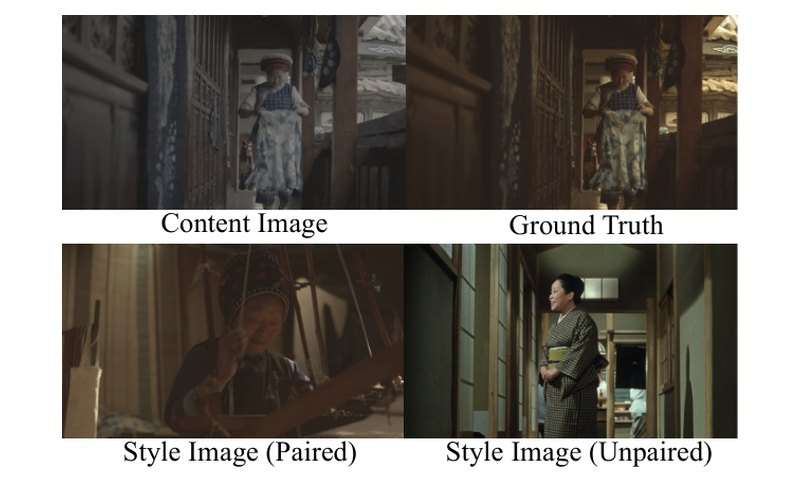
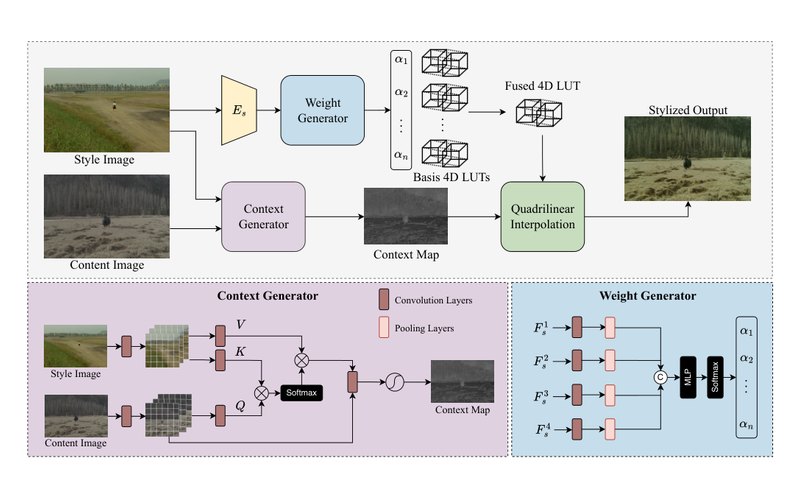
Combines LUT efficiency with neural adaptability: a style-guided 4D LUT plus a context map from content-style cross-attention gives spatially adaptive colour transfer that preserves structure. Introduces the PST50 benchmark; 66.7% lower LPIPS than 3D LUT methods, at 16 FPS on video.
@inproceedings{gong2025salut,
  title     = {SA-LUT: Spatial Adaptive 4D Look-Up Table for Photorealistic Style Transfer},
  author    = {Gong, Zerui and Wu, Zhonghua and Tao, Qingyi and Li, Qinyue and Loy, Chen Change},
  booktitle = {Proceedings of the IEEE/CVF International Conference on Computer Vision (ICCV)},
  year      = {2025}
}
Bridges an off-the-shelf multimodal LLM and a diffusion model with learnable queries and a light transformer connector. Strong results on GenEval, DPG-Bench and WISE with only 1.1B and 3.1B activated parameters; all weights, code and 23M training image-text pairs are released.
@article{wu2025openuni,
  title   = {OpenUni: A Simple Baseline for Unified Multimodal Understanding and Generation},
  author  = {Wu, Size and Wu, Zhonghua and Gong, Zerui and Tao, Qingyi and Jin, Sheng and Li, Qinyue and Li, Wei and Loy, Chen Change},
  journal = {arXiv preprint arXiv:2505.23661},
  year    = {2025}
}
* Equal contribution · † Project lead
Experience
2025.09 – nowAlgorithm Research Intern, SenseTime, SingaporeEmbodied intelligence and world models
An open-source terminal for working across machines: durable SSH sessions, remote files, GPU and port views, and command help from the AI you already use. macOS, Linux and Windows.